

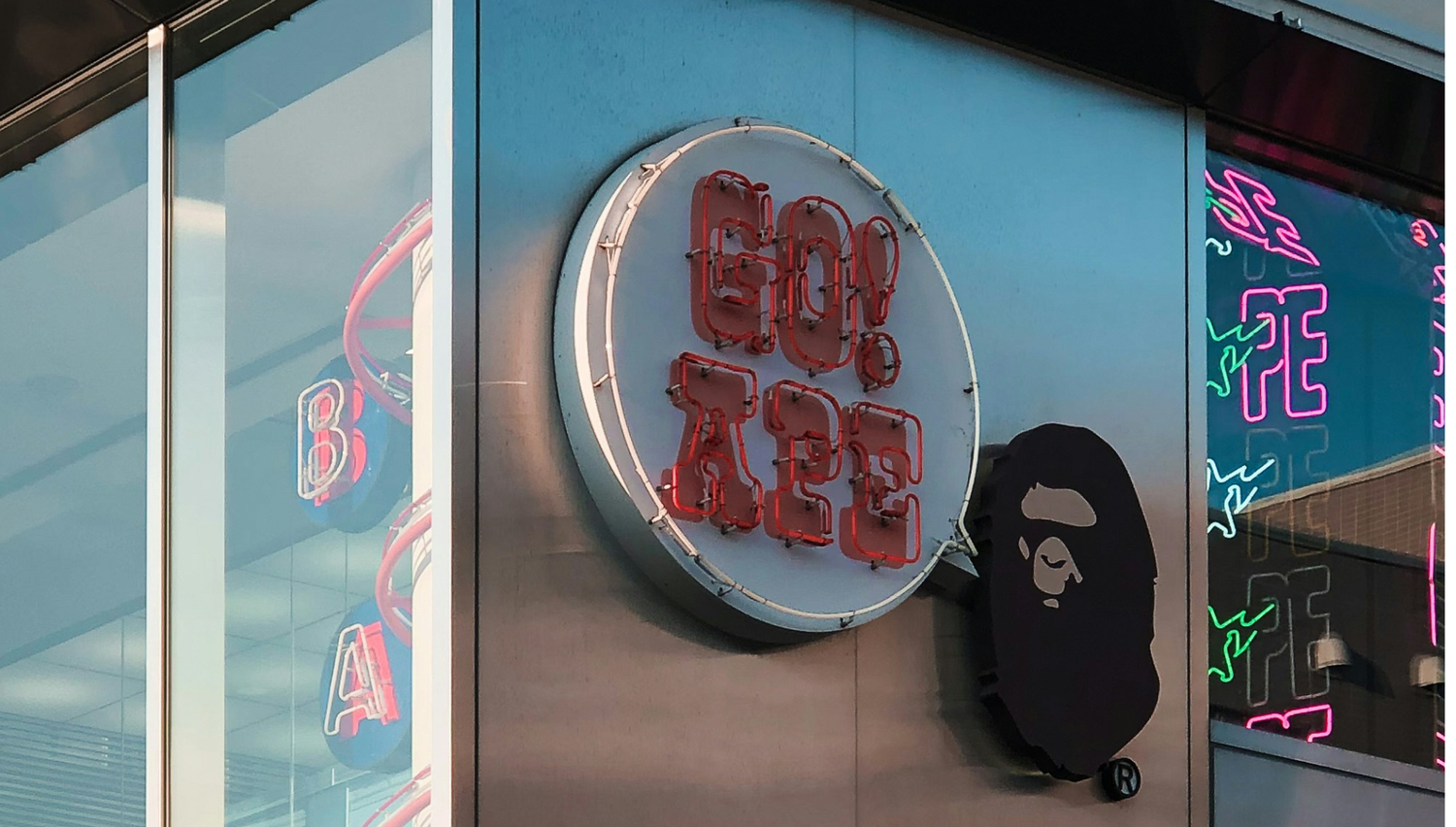
How A Bathing Ape Started
A Bathing Ape, commonly known as BAPE, was founded in 1993 by Nigo in Tokyo, Japan. Inspired by hip-hop culture, vintage Americana, sneakers, and Japanese pop culture, Nigo created BAPE as a niche streetwear label that would eventually become one of the most influential fashion brands in the world.
The name “A Bathing Ape” comes from the Japanese phrase “a bathing ape in lukewarm water,” which references overindulgence. The brand reflected the youth culture of 1990s Tokyo and quickly became associated with exclusivity and individuality.
Nigo was heavily inspired by artists like The Notorious B.I.G. and American street fashion. At the same time, he developed a uniquely Japanese approach to branding and product scarcity.
The Early Days of BAPE
BAPE began as a small label sold through Nigo’s store, Nowhere, located in Tokyo’s Harajuku district. The store itself became a cultural hotspot for fashion enthusiasts, musicians, and creatives.
Instead of mass-producing clothing, Nigo intentionally created limited quantities. Often, only around 30 to 50 pieces of a design were released. This scarcity strategy created hype long before social media existed.
BAPE’s early products included:
- Graphic T-shirts
- Camouflage jackets
- Full-zip Shark Hoodies
- BAPE STA sneakers
- Ape Head logo apparel
The bold graphics and colorful designs stood out from traditional fashion brands and helped establish BAPE’s unique identity.
Why BAPE Became So Successful
1. Limited Releases Created Massive Demand
One of the biggest reasons BAPE succeeded was exclusivity. Limited drops created urgency among buyers and established BAPE as a status symbol within streetwear culture.
Consumers lined up outside stores for new collections, and resale prices skyrocketed. This “drop culture” later influenced brands like Supreme and modern sneaker releases.
2. Celebrity Endorsements Boosted Global Awareness
BAPE exploded internationally in the early 2000s after American hip-hop artists began wearing the brand.
Celebrities associated with BAPE included:
- Pharrell Williams
- Kanye West
- Lil Wayne
- Soulja Boy
Pharrell and Nigo developed a close friendship and later collaborated on brands like Billionaire Boys Club and Ice Cream.
Kanye West also collaborated with BAPE on the iconic “College Dropout” BAPE STA sneaker, which became one of the most collectible streetwear shoes ever released.
3. BAPE Defined Early Streetwear Culture
Before streetwear became mainstream luxury fashion, BAPE helped pioneer the movement. The brand mixed:
- Hip-hop culture
- Japanese fashion
- Pop art aesthetics
- Sneaker culture
- Luxury branding
This formula made BAPE feel both underground and aspirational.
The Shark Hoodie, colorful camo prints, and Ape Head logo became instantly recognizable worldwide.
When Did Nigo Leave BAPE?
Nigo officially left BAPE in 2011 after the company was sold to Hong Kong fashion conglomerate I.T Group.
The sale reportedly occurred because BAPE faced financial difficulties and growing debt. I.T Group acquired a majority stake in the company, and Nigo stepped away shortly afterward.
Although Nigo remained involved briefly during the transition period, his creative influence over the brand largely ended after the acquisition.
What Changed After Nigo Left?
Shift Toward Commercial Expansion
After Nigo’s departure, BAPE became more commercially accessible. The brand expanded internationally with more stores, collaborations, and product availability.
Some longtime fans believed this reduced the exclusivity that originally made BAPE special.
Key changes included:
- Increased production volumes
- Wider global distribution
- More frequent collaborations
- Greater focus on mainstream fashion markets
While BAPE remained popular, collectors often argue that the brand lost some of its underground authenticity after 2011.
Design Evolution
Under Nigo, BAPE designs were deeply connected to his personal taste, music influences, and vintage obsessions.
After his exit, the brand leaned more heavily into:
- Re-releases of classic designs
- Commercial collaborations
- Logo-driven collections
The visual identity stayed recognizable, but many fans noticed a creative shift.
Continued Global Success
Despite criticism from some original supporters, BAPE remained commercially successful after Nigo left.
Collaborations with brands and franchises helped the company stay relevant, including partnerships with:
Today, BAPE continues to operate globally and remains one of the most recognizable names in streetwear.
Nigo’s Career After BAPE
After leaving BAPE, Nigo launched new creative ventures and continued influencing fashion culture.
In 2021, he became the artistic director of Kenzo, bringing his streetwear influence into luxury fashion.
Nigo also continued collaborating with Pharrell and other artists while expanding his role as a designer, DJ, and cultural curator.
His impact on modern streetwear remains enormous, influencing brands like:
Why BAPE Still Matters Today
BAPE helped shape modern streetwear marketing through:
- Limited-edition drops
- Celebrity collaborations
- Strong visual branding
- Cultural exclusivity
Many of the strategies used today by sneaker brands and luxury streetwear companies were popularized by BAPE during the 1990s and 2000s.
Even decades after its founding, the brand continues to influence fashion, music, and youth culture worldwide.
FAQ About BAPE and Nigo
What does BAPE stand for?
BAPE stands for “A Bathing Ape,” a Japanese streetwear brand founded by Nigo in 1993.
Who founded A Bathing Ape?
BAPE was founded by Japanese designer and entrepreneur Nigo.
Why did Nigo leave BAPE?
Nigo left BAPE in 2011 after the company was sold to I.T Group due to financial struggles and debt issues.
Is BAPE still popular today?
Yes. BAPE remains one of the world’s most recognized streetwear brands and continues collaborating with major fashion and entertainment companies.
What made BAPE famous?
BAPE became famous for limited-edition releases, bold camouflage designs, celebrity endorsements, and its strong connection to hip-hop culture.
What changed after Nigo left BAPE?
After Nigo’s departure, BAPE became more commercially focused with wider product availability and increased collaborations. Some fans believe the brand lost part of its original exclusivity and creative direction.
Did Nigo start another brand after BAPE?
Yes. Nigo continued working on several fashion projects, including Billionaire Boys Club, and later became artistic director of Kenzo.

Leave a comment
This site is protected by hCaptcha and the hCaptcha Privacy Policy and Terms of Service apply.